How Business Owners Can Set AI Agent SLAs Their Ops Team Can Actually Measure
An AI agent SLA is useful only when an operator can answer three questions from telemetry: what work was attempted, whether it met the agreed standard, and what it cost. If those answers live in a vendor dashboard you cannot query, you do not have an operational SLA. You have a promise.
That distinction matters for business owners building DevOps. Agents can open pull requests, triage alerts, prepare releases, and answer internal questions. Each one touches systems that already have owners, budgets, and failure modes. A vague SLA makes those costs show up later as long incidents, duplicate actions, and invoices nobody can explain.
Start with the unit of work
Do not write an SLA for “the agent.” Write it for a job. A job might be “prepare a dependency update,” “summarize an incident,” or “answer a support question using approved sources.” Define where a job starts, what counts as finished, and who accepts the result.
For a low-risk assistant, completion may mean the user received a response that passed a schema check. For an agent allowed to change infrastructure, completion should not mean “the model returned text.” It should mean the change was applied through an approved path, recorded in an audit log, and either merged automatically or accepted by a person. Keep separate classes for read-only, recommended, and write actions. They should not share one availability target.
The business decision here is control. A narrow job with a measurable finish line is cheaper to monitor and easier to improve. A broad “help the team” agent creates arguments about whether a reply was good enough.
Instrument the boundary, not the model
Ops teams need signals at the edge of the agent system. Record every accepted job, final outcome, wall-clock duration, queue time, tool calls, retry count, stop reason, and cost inputs. Give each run a stable ID and carry it through the model request, tool calls, and final response. OpenTelemetry describes traces as the path of a request and spans as units of work, which maps cleanly to an agent run that calls several tools.
Use metrics for aggregate health and traces for diagnosis. The Prometheus metric types documentation defines counters as monotonically increasing values and histograms as observations grouped into buckets. Counters fit attempts, successes, blocked actions, and retries. Histograms fit latency and token counts. Gauges can show queue depth or active runs.
Be careful with labels. Run IDs and customer identifiers make excellent trace attributes and poor metric labels because they create a new time series for nearly every job. Keep metric labels to stable fields such as agent class, tool, model family, environment, and outcome. Put personal data, prompts, and raw tool output in access-controlled logs or traces with a short retention period.
Turn signals into a measurable objective
Pick one primary availability indicator. A practical definition is valid completions divided by valid accepted requests. Define “valid” before launch. Exclude malformed inputs and cancelled requests by rule, not by mood after a bad month.
Latency should start when the job is accepted, not when the model call begins. Users feel the queue. Track model time, tool time, and review time separately because they have different owners. For quality, use signals that can be checked without a debate: schema validation failures, rejected recommendations, reverted changes, and policy blocks. Human satisfaction surveys can support the picture, but they should not be the only SLI.
Write an internal SLO first. It is the target your team uses to run the service. The SLA is the smaller, customer-facing promise built from it. Include the measurement window, the source of truth, exclusions, reporting period, and what happens when the target is missed. A monthly report with a queryable dashboard is worth more than a long clause full of adjectives.
Alert on budget burn, not every bad run
Agent work is uneven. A single failure may be harmless; a steady stream of minor failures can exhaust the budget. Google’s SRE workbook on alerting on SLOs recommends multiwindow, multi-burn-rate alerts so a page means a significant event and the alert stops soon after recovery.
Use that idea in plain terms. Page when both a short window and a longer window show the same high burn. Open a ticket for slower burn that still threatens the period. Do not page on one failed job unless that class of job is rare and high impact. For low-volume agents, add synthetic checks or combine related jobs for alerting, because a single error can look enormous in a small sample.
Asserts on quality need the same care. If blocked writes are expected during a policy change, the dashboard should show that change instead of hiding it. Every alert should point to a run, a trace, and an owner.
Design the runtime for tradeoffs
Timeouts, retries, and approval steps decide both SLA performance and cost. A short timeout improves latency numbers but turns slow jobs into failures. A long timeout raises the chance of completion while holding capacity and budget. Retries can recover transient tool errors, yet they can also duplicate writes if the tool is not idempotent. Use idempotency keys and a maximum attempt count for any action with side effects.
Set hard limits on tool calls, tokens, steps, and spend per job. When a limit is reached, return a clear partial result or hand the work to a person. This is better than silently consuming budget and worse than letting an agent improvise forever. Put irreversible actions behind approval, even when that adds latency to the SLA.
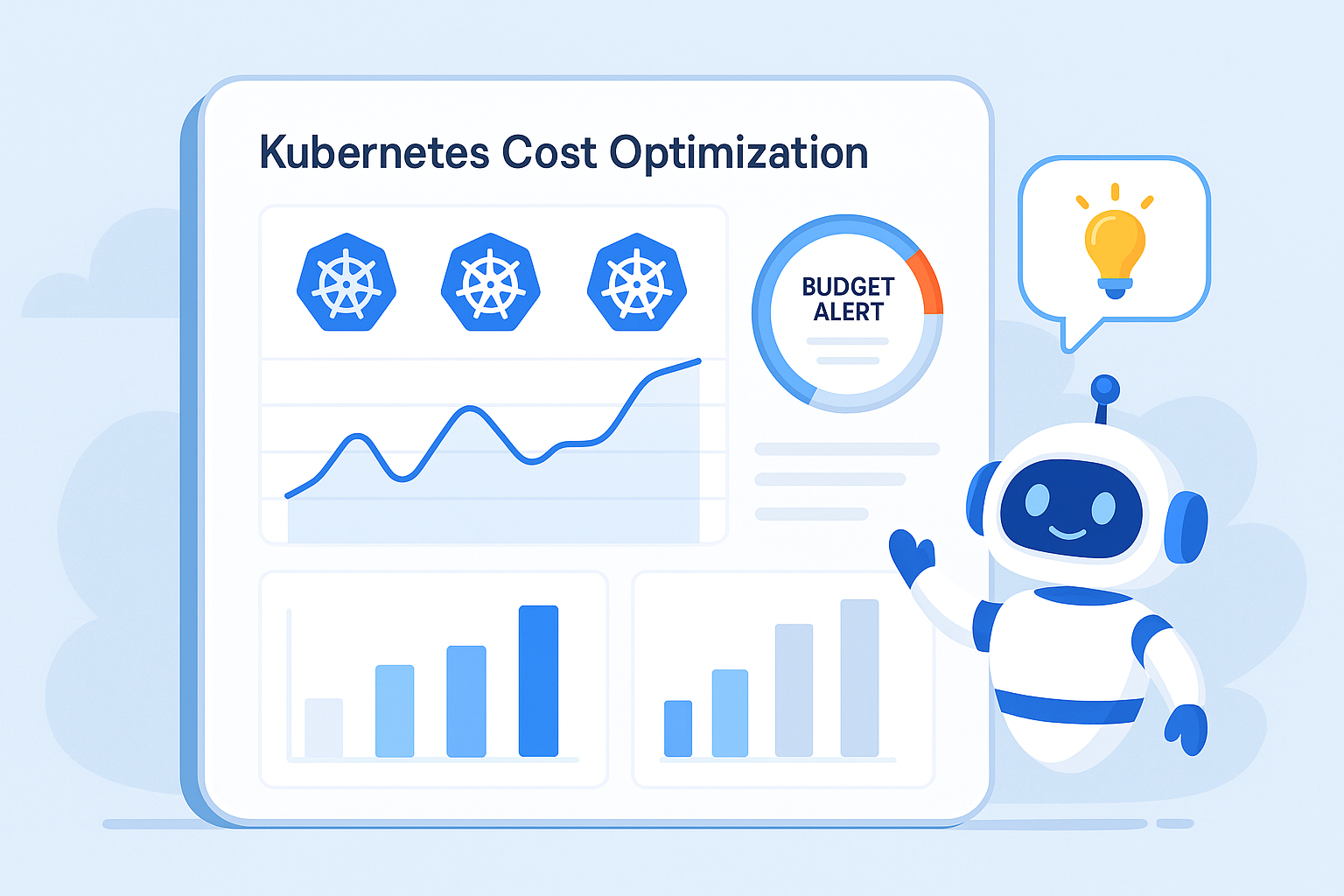
Kubernetes is often where these limits become real. The Kubernetes resource management documentation states that requests are used for scheduling, CPU limits are enforced through throttling, and memory limits can lead to OOM kills. Size agent pods from measured use, then watch throttling and restarts. A CPU limit that looks tidy on paper can stretch every model call.
The Kubernetes probe documentation explains that readiness controls whether a pod receives Service traffic, liveness restarts a failing container, and startup probes protect slow starts. Use readiness to keep jobs away from an agent that cannot reach its dependencies. Use startup probes for slow initialization. Treat liveness as a last resort, because restarting a worker during a long job may create the very failure your SLA is trying to avoid.
Security belongs in the SLA evidence
An agent with tool access is a privileged client. Give it a separate identity, least-privilege permissions, an allowlist of tools, and network paths that match its job. Log the tool, arguments, decision, and result for every write. If prompt injection is a plausible input risk, test it as part of release checks and record blocked attempts as a security signal, not a generic error.
Do not promise “zero incidents” in a percentage-based SLA. Make unauthorized writes, secret exposure, and unapproved deployments explicit incident classes with immediate review. Those events need root-cause work, not credits on next month’s bill.
Cost has to be reported beside reliability
Track cost per accepted job and cost per valid completion. Those two numbers expose rework. If retries are cheap but frequent, latency and tool load still suffer. If a larger model improves acceptance but doubles spend, the decision is a business one. Put the threshold in writing: which job classes justify higher unit cost, and which should route to a person sooner.
Caching and batching can lower spend, but they can also serve stale answers or delay urgent work. Canary prompt, tool, and model changes. Version them alongside code so a regression can be tied to a specific run instead of a guess.
Frequently Asked Questions
What is the difference between an agent SLA and uptime?
Uptime says the process was running. An agent SLA says accepted work met a defined outcome. A pod can be available while every job fails validation.
Should retries count as failures?
Count them in both places. The final outcome determines success; retry count and cost reveal whether the service is healthy.
How do we measure answer quality?
Start with checkable signals such as schema validity, source citations, rejection, and reversion. Add human review for subjective quality, with a clear rubric and sample size.
What if volume is too low for useful percentages?
Report counts alongside rates, use synthetic checks where they represent real work, and group related jobs. Do not let one failed request trigger a dramatic percentage without context.
Who owns the SLA?
The business owner defines the outcome and acceptable cost. Engineering owns the indicators and runtime. Security owns the guardrails. Ops owns alerting and the report.
If you want help turning an AI agent SLA into signals your ops team can actually measure, talk to Kubeify.