Choosing Between Managed AI Services and Kubernetes for Your Business
The choice between a managed AI service and Kubernetes is less about technology than about where you want your team to spend its attention. A managed AI service lets you consume models through an API while someone else operates the infrastructure. Kubernetes gives you a common control plane for containers, whether self-managed or through Amazon EKS or Google Kubernetes Engine. Both can run AI workloads. They differ in control, operational surface, and cost behavior.
What each option actually buys you
A managed AI service is often the shortest path from idea to working feature. You authenticate, send requests, and pay for what you consume. The vendor handles model serving capacity, patching, availability zones, and other undifferentiated infrastructure. Your responsibilities concentrate around identity, data classification, retention, prompt and output handling, network paths, and audit evidence. Read the provider’s shared responsibility documentation instead of assuming the service is secure by default.
Kubernetes is a different bargain. It gives you a declarative API for deploying, scaling, networking, and isolating workloads. A managed Kubernetes service removes the control plane from your daily toil. Amazon’s EKS manages the control plane while you remain responsible for workloads and nodes. Google’s GKE manages the control plane and, in Autopilot mode, the worker nodes. Workload configuration, access policies, resource requests, and cost controls remain yours. A self-managed cluster adds etcd, certificates, upgrades, and networking plugins.
Kubernetes is a platform you operate, not a product you finish adopting.
The real tradeoff: control versus operational surface
Kubernetes is the stronger choice when the workload needs more than a model endpoint. You may need custom inference servers, GPU scheduling across teams, batch training, multi-step pipelines, service discovery, or tight co-location with existing services. Kubernetes provides namespaces for isolation, network policies for traffic control, resource requests and limits for scheduling, and autoscaling for demand changes. It also offers a portable model that can run across clouds or on-premises hardware.
The cost of that flexibility is a large configuration surface. Every capability is a knob someone must set, review, and maintain. Managed AI services narrow that surface deliberately: fewer decisions and less infrastructure to patch, but less control over runtime details, scheduling, and sometimes model behavior. Lock-in can appear in SDKs, prompt formats, evaluation tooling, and data pipelines.
The strategic question is whether runtime, data path, and scheduling control are central to your product. If they are, Kubernetes may be worth the overhead. If speed and focus matter more, a managed service may be the better default.
Cost: compare total cost of ownership, not list price
Managed AI pricing is often consumption-based. It feels simple at low volume, but unit costs do not always fall as usage grows, and line items accumulate: provisioned throughput, storage, data transfer, logging, evaluation runs, and support. Quotas and rate limits can force design work. The benefit is that you avoid paying for idle GPU capacity and do not need a platform team to keep the serving layer alive.
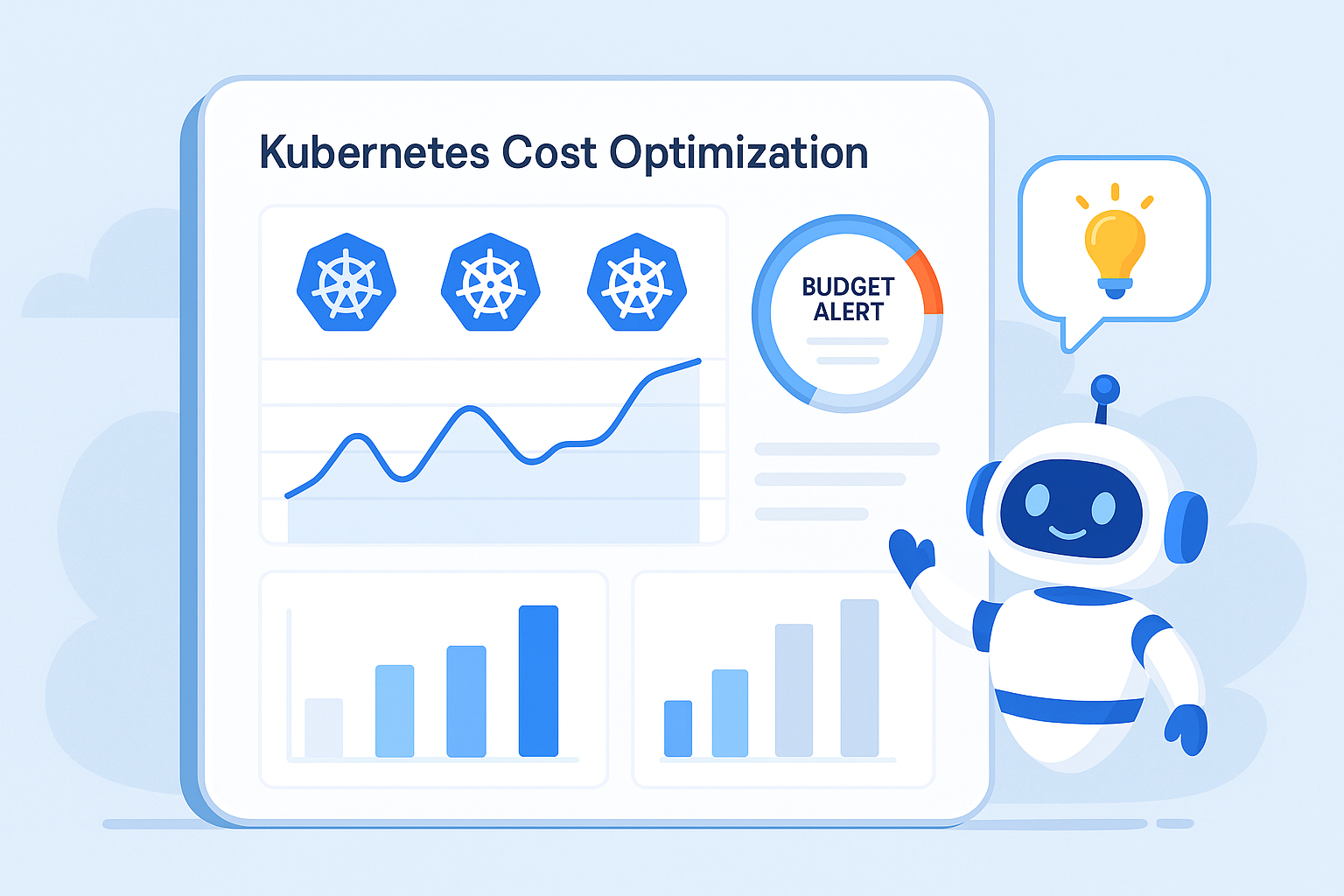
Kubernetes shifts cost into infrastructure and labor. You pay for nodes, storage, load balancers, network address translation, observability, and often a control plane fee. You also pay for idle headroom, because a cluster that cannot absorb a traffic spike is not resilient. Kubernetes gives you levers a managed AI service may not expose: bin-packing workloads, rightsizing requests, spot capacity for fault-tolerant jobs, and node pools that scale with demand. The Kubernetes documentation on resource management for pods and containers explains how requests affect scheduling and how limits are enforced; both matter for cost control.
Do not compare a managed AI invoice with a Kubernetes compute invoice. Add the people who operate the platform, on-call burden, upgrade work, security reviews, and internal tooling. Then compare that total with the managed service’s fully loaded cost, including integration and governance. Utilization, demand shape, and team maturity decide the outcome.
Security and compliance: shared responsibility in both models
Neither option transfers all security work to the vendor. With managed AI, the provider secures the service, but you still own access control, data handling, retention, network egress, and model outputs. With Kubernetes, you always own workload security: image provenance, pod security, secrets, network policy, and role-based access.
The Kubernetes security overview is explicit that cluster security depends on controlling access to the API, encrypting data in transit, protecting secrets, enforcing pod security standards, and using network policies and audit logging. A managed control plane does not enforce them. A production cluster needs a baseline: namespaces with quotas, least-privilege RBAC, admission policies that block privileged containers, image scanning, encrypted secrets, and audit logs shipped to a system you control.
Managed AI services have a comparable checklist. Confirm where data is stored and processed, whether prompts or outputs are retained, how private connectivity works, which identity provider is trusted, what audit logs are available, and how the vendor handles subprocessors. Those answers matter more than benchmarks for regulated data. The right question is not “which is more secure” but “which security responsibilities can my team execute consistently?”
Technical fit: where Kubernetes earns its complexity
Kubernetes earns its keep when you have a platform-shaped problem. Examples include multiple services that need consistent deployment and networking, GPU capacity shared across teams, batch jobs on interruptible instances, or inference services that must sit next to data processing. The levers are concrete: separate node pools for different instance types, taints and tolerations to place workloads, topology spread constraints for availability, pod disruption budgets for safe upgrades, and horizontal pod autoscaling for traffic. For GPUs, device plugins expose hardware to the scheduler, but you still own driver compatibility, capacity planning, and utilization.
The operational requirements are concrete. You need infrastructure as code, a GitOps or equivalent deployment path, policy as code, centralized logging and metrics, a tested upgrade cadence, and clear cluster ownership. Without them, Kubernetes becomes a set of snowflake environments that are expensive to change and risky to secure.
Technical fit: where managed AI wins
Managed AI wins when the model is a component rather than the product. If your team is small, demand is spiky or uncertain, and the differentiating work is in the application, data, or workflow, a managed endpoint removes undifferentiated work. It also avoids the lead time of building GPU capacity and the specialized skills needed to run inference infrastructure well.
Design an exit path before you need one. Keep business logic out of vendor-specific SDK calls where practical, store prompts and evaluation data in a system you control, and document how you would switch providers or move to self-hosted serving. You do not need a full abstraction layer on day one. Avoid decisions that make a future move unnecessarily expensive.
A practical decision framework
Ask five questions. Is the AI workload a core differentiator or a supporting feature? Is demand steady and high, spiky, or experimental? Do you have a platform team that can own Kubernetes safely, including on-call? What data residency, retention, and audit obligations apply? What is the fully loaded cost at twelve and twenty-four months, including people and exit work?
If demand is steady, the workload needs runtime control, and you have platform skills, Kubernetes can be cheaper at the margin. If demand is variable, the team is small, and speed matters, managed AI is often the better starting point. A hybrid is possible: managed AI for experimentation and variable inference, Kubernetes for steady high-throughput services or data-adjacent workloads. Hybrid adds integration, identity, observability, and governance overhead, so adopt it for a specific reason.
Frequently Asked Questions
Is Kubernetes always cheaper than a managed AI service?
No. Kubernetes can be cheaper at high, steady utilization, especially with an existing platform team and spot capacity. At low or unpredictable volume, idle capacity and operational labor often make the managed service cheaper. Model both at your expected utilization.
Can we use managed AI and Kubernetes together?
Yes. You can run application services and pipelines on Kubernetes while calling a managed endpoint. This adds network, identity, and observability complexity, so document the data path and failure modes.
Does managed Kubernetes remove the need for a platform team?
It reduces control plane work, not ownership. Someone still owns workload configuration, access policies, upgrades, cost controls, and incident response. The team can be smaller, but not absent.
How do we avoid vendor lock-in with a managed AI service?
Use standard interfaces, keep prompts and evaluation data portable, avoid burying logic in vendor SDKs, and confirm terms for data export and termination. Test the exit path before it is urgent.
What about GPUs?
Managed AI hides GPU capacity planning, which helps if you do not want utilization risk. Kubernetes gives scheduling control and sharing, but you own drivers, node pools, and idle hardware cost. Decide whether GPU operations are a core competency.
If you are weighing these options for a real workload, Kubeify can help you pressure-test the architecture, build a defensible cost model, and choose a path your team can operate. Start a conversation with Kubeify.